
Wir durchsuchen 2.015.571 Objekte für Sie.



拍卖:19 天
作为 2026-10-21 12:48:12
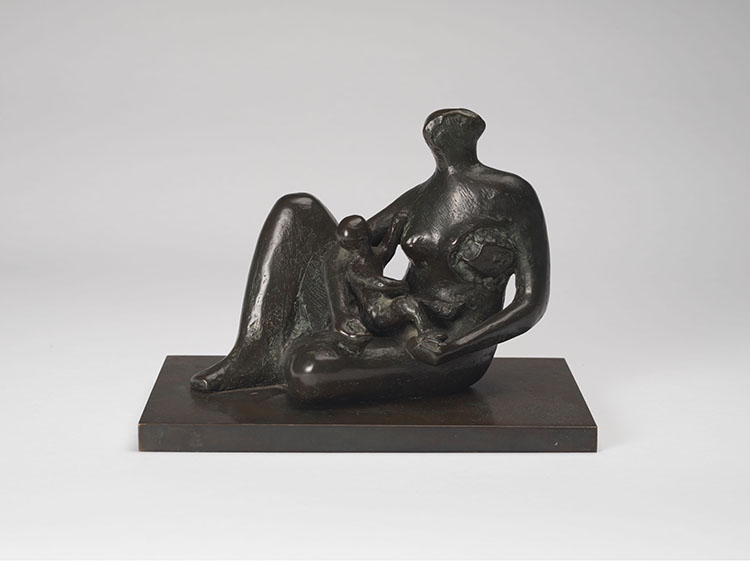
Joan Miró (1893-1983) Maquette de l'Arc de la Fondation Maeght, 1962 Bronze with green and black patina 17-3/8 x 20-1/2 x 7 inches (44.1 x 52.1 x 17.8 cm) Ed. 3/8 Inscribed and numbered on front of the left leg: Miro 3/8 Stamped with foundry mark on the back of the right leg: Susse Fondeur Paris PROVENANCE: Galerie Lelong, New York; Private collection, Dallas, acquired from the above. EXHIBITED: Kunsthaus, Zurich, "Joan Miró: Das plastische Werk," June 4-July 30, 1972, p. 54, no. 101 (another cast illustrated); Museum of Fine Arts, Montreal, "Miró Marrant à Montréal," June 20-October 5, 1986, pp. 64 and 239, no. 3 (another cast illustrated); Fondation Pierre Gianadda, Martigny, "Joan Miro Retrospective," June 6-November 11, 1997, pp. 149 and 214, no. 73 (another cast illustrated); Fondation Maeght, Saint-Paul, "Joan Miro: Métamorphoses des formes," April 1-June 25, 2001, pp. 58 and 221, no. 11 (another cast illustrated); Basil & Elise Goulandris Foundation, Andros, "Joan Miró: In the Orbit of the Imaginary," June 23-September 22, 2002, no. 58 (another cast illustrated). LITERATURE: A. Jouffroy and J. Texidor, Miro Sculptures, Paris, 1973, p. 195, no 52 (another cast illustrated); E.F. Miro and P.P. Chapel, Joan Miro: Sculptures Catalogue Raisonne, 1928-1982, Paris, 2006, p. 72, no. 59 (another cast, p. 73). Conceived in 1962, Maquette de l'arc de la Fondation Maeght occupies an important place in Joan Miró's development as a sculptor. The bronze served as the model for the monumental L'Arc of 1963, created for Miró's celebrated Labyrinthe at the Fondation Maeght in Saint-Paul-de-Vence. There, sculpture, architecture, and nature come together in an environment that allows visitors to move through Miró's imaginative world rather than simply observe it. In the present work, the familiar architectural form of an arch is transformed into something organic and almost creature-like. Its irregular legs, projecting forms, and richly patinated surface suggest architecture, landscape, and the human or animal body without becoming any one of them. This transformation of familiar forms into something mysterious and unexpected lies at the heart of Miró's sculptural language. The work also reflects Miró's close relationship with Aimé and Marguerite Maeght. Miró played an important role in the creation of their foundation and recommended his longtime friend Josep Lluís Sert as its architect. The resulting Labyrinthe offered Miró an extraordinary opportunity to bring sculpture into direct dialogue with architecture, landscape, and the viewer. Maquette de l'arc de la Fondation Maeght is therefore much more than a model for a larger sculpture. Within its intimate scale lies the idea for something monumental—an environment in which Miró's distinctive vocabulary of forms could leave the canvas and become part of the physical world. HID12401132022 © 2026 Heritage Auctions | All Rights Reserved www.HA.com/TexasAuctioneerLicenseNotice
Kunsthaus, Zurich, "Joan Miró: Das plastische Werk," June 4-July 30, 1972, p. 54, no. 101 (another cast illustrated); Museum of Fine Arts, Montreal, "Miró Marrant à Montréal," June 20-October 5, 1986, pp. 64 and 239, no. 3 (another cast illustrated); Fondation Pierre Gianadda, Martigny, "Joan Miro Retrospective," June 6-November 11, 1997, pp. 149 and 214, no. 73 (another cast illustrated); Fondation Maeght, Saint-Paul, "Joan Miro: Métamorphoses des formes," April 1-June 25, 2001, pp. 58 and 221, no. 11 (another cast illustrated); Basil & Elise Goulandris Foundation, Andros, "Joan Miró: In the Orbit of the Imaginary," June 23-September 22, 2002, no. 58 (another cast illustrated).
Galerie Lelong, New York; Private collection, Dallas, acquired from the above.
Presents well overall. Wear commensurate with age. Light rubbing to tips of nodules. Some dust observed to recesses.



 Pablo Picasso
Paul Klee
 Henry Moore
Marc Chagall
Henry Moore
