Wir durchsuchen 2.033.987 Objekte für Sie.



拍卖:24 天
作为 2026-05-20 16:54:19
NULL
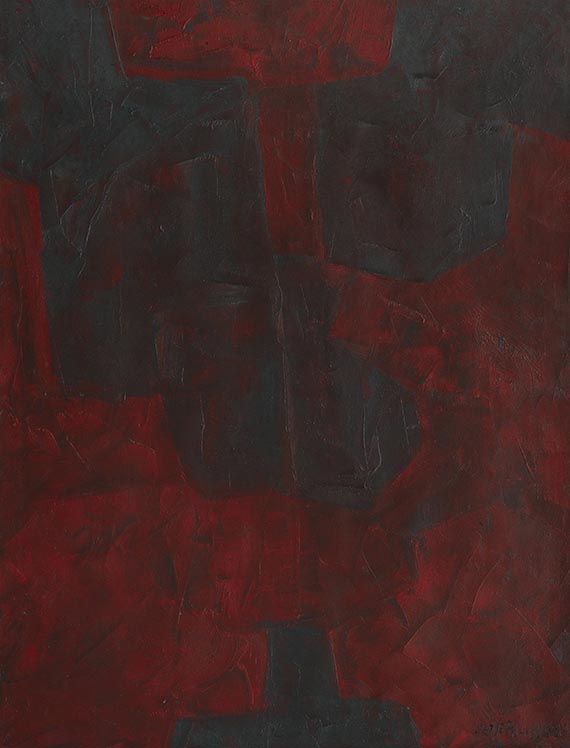
Each as triptych: Poliakoff, Galerie Im Erker, St. Gallen, April 24-June 19, 1965, cat. no. 25. (with the exhibition label on the stretcher). Serge Poliakoff, Kunstmuseum, St. Gallen, June 11-July 31, 1966, cat. no. 98. Serge Poliakoff, Musée National d’Art Moderne, Paris, September 22-November 16, 1970, cat. no. 63. Serge Poliakoff. Painting, tempera, gouache, Tel Aviv Museum of Art, Tel Aviv, December 27, 1971-February 1, 1972, cat. no. 23. Serge Poliakoff. Oil, tempera, gouache, Statens Museum for Kunst, Copenhagen, Mar. 3-Apr. 9, 1972; Kunstnernes Hus, Oslo, May 13-28, 1972; Trondhjems Kunstforening, Trondheim, June 2-20, 1972; Lillehammer Bys Malerisamling, Lillehammer, June 23-July 14, 1972, cat. no. 23. Serge Poliakoff. Nykytaiteen Klassikoita / Museum of Modern Art, Tampere, Aug. 15-Sept. 17, 1972; Kunsthalle Helsinki / Helsingin Taidehallissa, Oct. 27-Nov. 12, 1972, Cat. No. 23. Poliakoff, Galleria Editalia, Rome, October 26-November 30, 1973, cat. no. 14. Serge Poliakoff, Christian Fayt Art Gallery, Knokke-Heist, June 23-August 4, 1984, cat. no. 14 (illustrated, shown here as a single work)
Galerie im Erker, St. Gallen (with the label on the stretcher). Private collection, Southern Germany. Private collection, Southern Germany (by descent, since 1996)
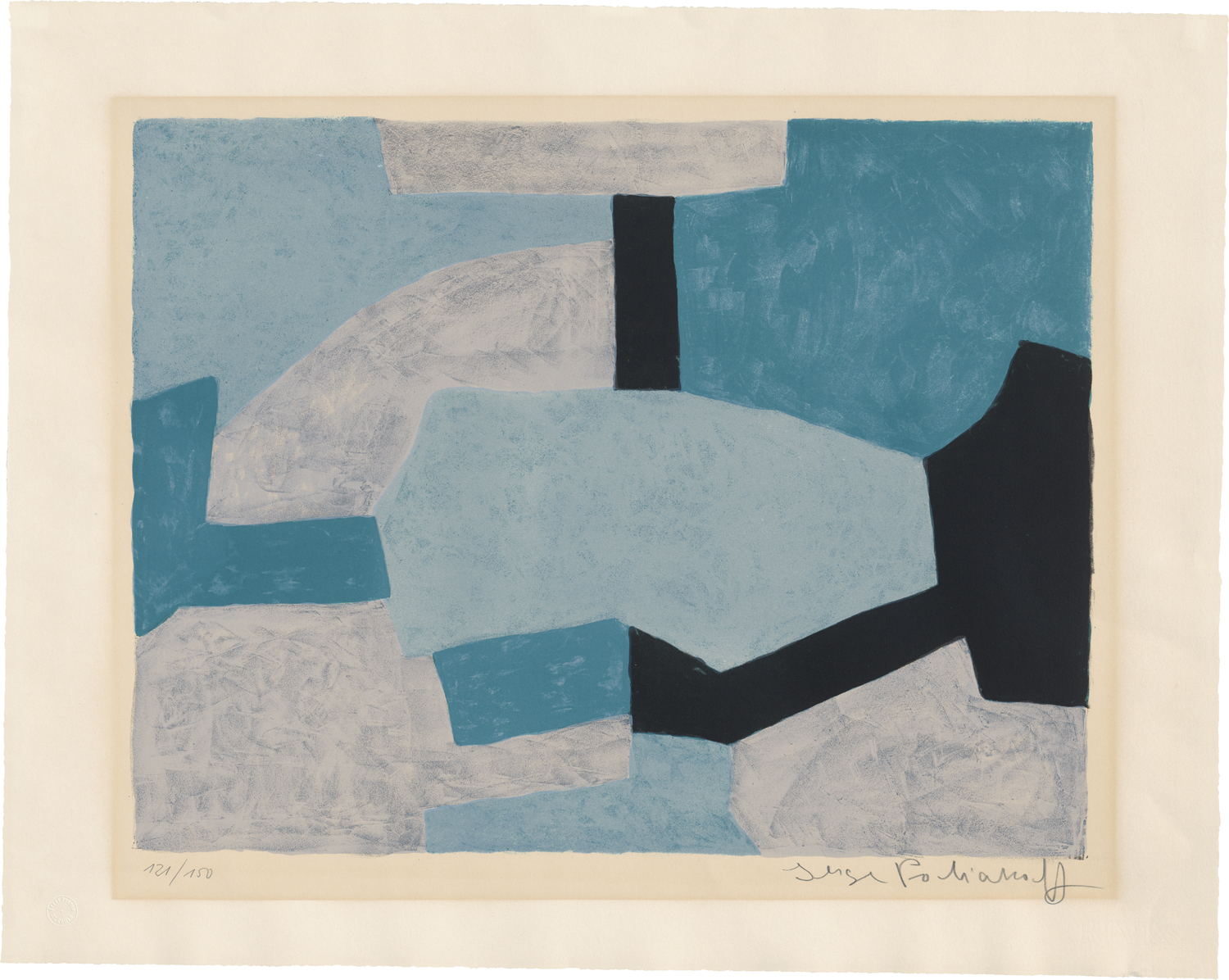
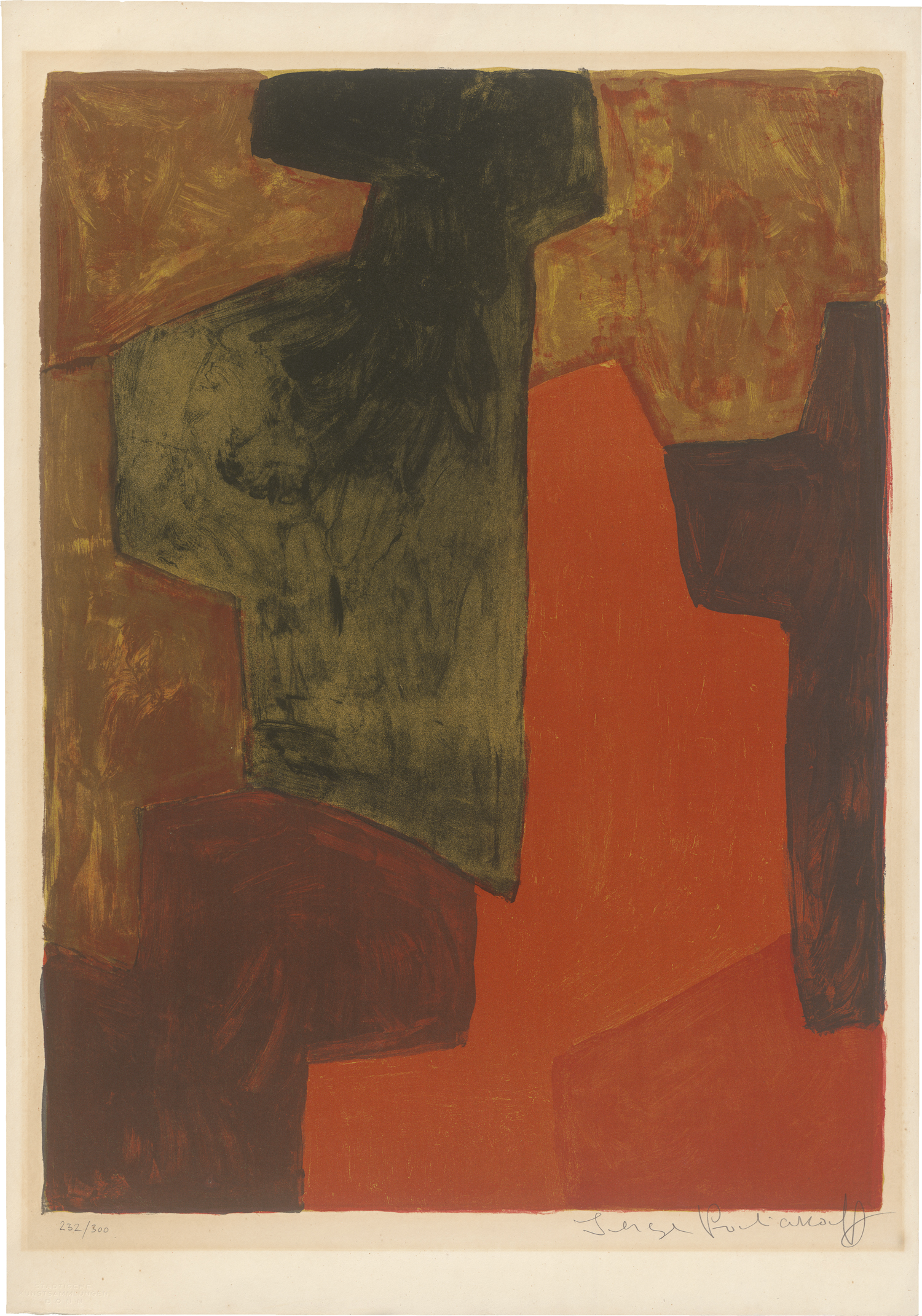
Next to Jean Dubuffet, Pierre Soulages, Jean Fautrier and others, Serge Poliakoff is one of the main protagonists of a circle of artists that made history as the "Nouvelle École de Paris". However, the denomination is misleading, as the "Nouvelle École de Paris" was no school or style in a classical meaning, it rather describes the development of abstract painting in Paris between the end of World War II and the early 1960s. In this context Poliakoff conceived a very individual form of abstract painting in which he juxtaposes the color fields. This atmospherically dense work offered here is characterized by a strongly reduced coloring that marks the peak of Poliakoff's artistic development, a moment that gave direction to formal aspects and captured the zeitgeist. Compositions from his late period of creation are defined by a radical two-dimensionality, compositional elements interlock like pieces of a puzzle and form a fascinating, almost architectural structure. Another trait typical of his later works is strong monochrome tendency and a reduced color scale. Despite the use of the complementary colors red and green the colro effect remains mellow, almost contemplative. His style is unmistakable, a Poliakoff can always be identified as such. [SM]
In very good condition. Edges minimally rubbed. Upper left corner with a small, minimally retouched color breakage. The condition report was compiled in daylight with the help of an ultraviolet light and to the best of knowledge.



 Serge Poliakoff
 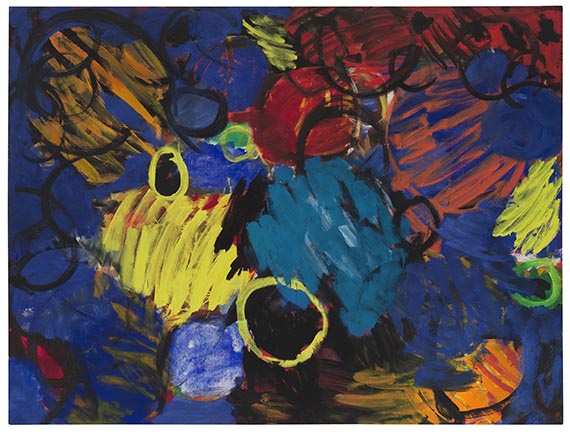 Ernst Wilhelm Nay
 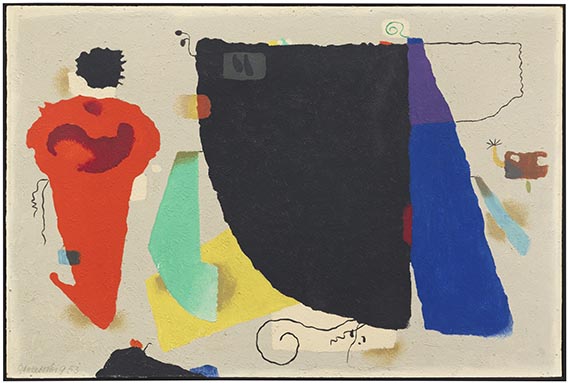 Willi Baumeister
 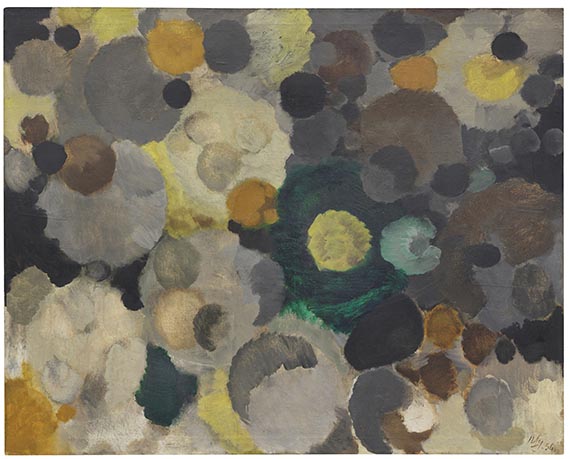 Ernst Wilhelm Nay
 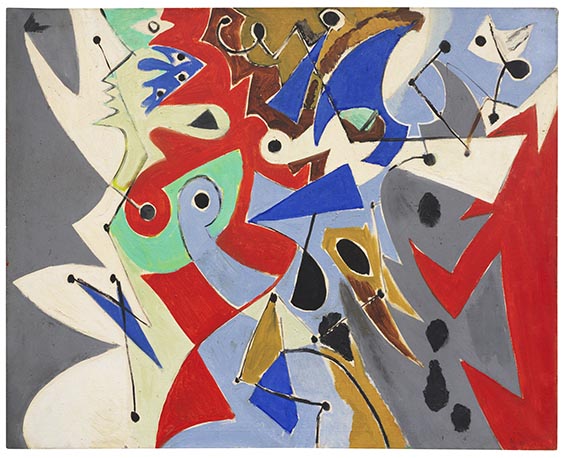 Ernst Wilhelm Nay
 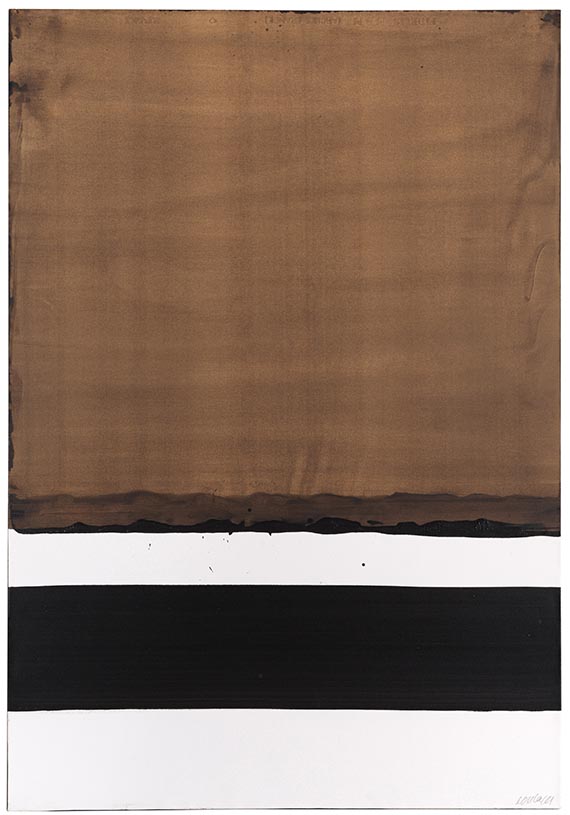 Pierre Soulages
 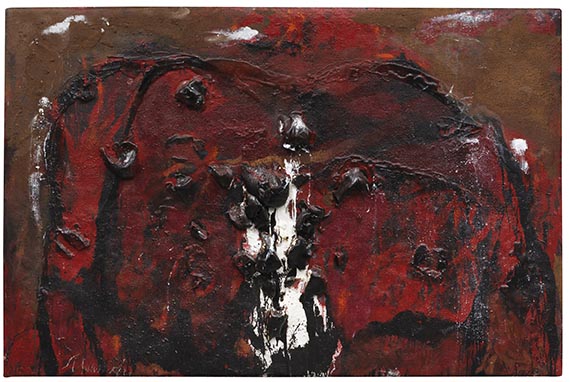 Emil Schumacher